
Shipping from China to USA doesn’t feel risky until the container arrives and the goods don’t match what you approved. A buyer who gets burned on a $50K order usually discovers the problem not during sample approval, but weeks later at the warehouse, when the mass production run misses the quality tolerance they had signed off. The ocean transit was never the issue.
FOB pricing looks simple because it stops at the port. Everything after that — ocean freight, cargo insurance, customs clearance, trucking — lands on your side of the ledger. Industry experience puts a number on the gap: around 40% of first-time importers underestimate customs duties, and 80% of shipping delays trace back to incorrect documentation. Get the commercial invoice and packing list wrong, and the cargo sits in customs while your e-commerce inventory plan collapses.
The fix is not memorizing every tariff line. It’s knowing which decisions you control and which ones you delegate. You control sample approval, quality tolerance, packaging accuracy, and the Incoterms written into your purchase order. You don’t control a carrier’s schedule or the latest Section 301 tariff update. A freight forwarder like WanSea, based in Qingdao on the main Asia-US shipping routes, can close that gap. For a first-time importer, that’s the difference between a lesson learned and a shipment that simply works.
Preparing Your Shipment
Your first import from China is won or lost at the booking stage.
Most first-time buyers ask for a freight quote before they know who is paying for what. That order creates confusion. Set the trade terms first, then match the route to the cargo. Start with Incoterms because every other cost in the quote depends on the risk handoff.
Incoterms: Who owns the risk at each handoff
- EXW (Ex Works): The supplier’s price ends at the factory gate. You arrange pickup, export clearance, ocean freight, and any damage claims. Full control, full workload.
- FOB (Free On Board): The supplier covers cost and risk until cargo is loaded on the vessel. After that, the shipment belongs to you. Most Chinese factories quote FOB, but U.S. customs duties and clearance sit on your side.
- DDP (Delivered Duty Paid): The forwarder delivers cleared to your U.S. door. This is what first-time importers usually mean by door-to-door shipping from China to USA. DDP makes the landed cost easier to predict because one party controls the full move.
- Sea freight: The lowest cost per cubic meter. Use FCL for a full container or pallet-heavy orders; use LCL when your goods share container space with other shipments. Transit runs in weeks, so this fits inventory restocks, not urgent launches.
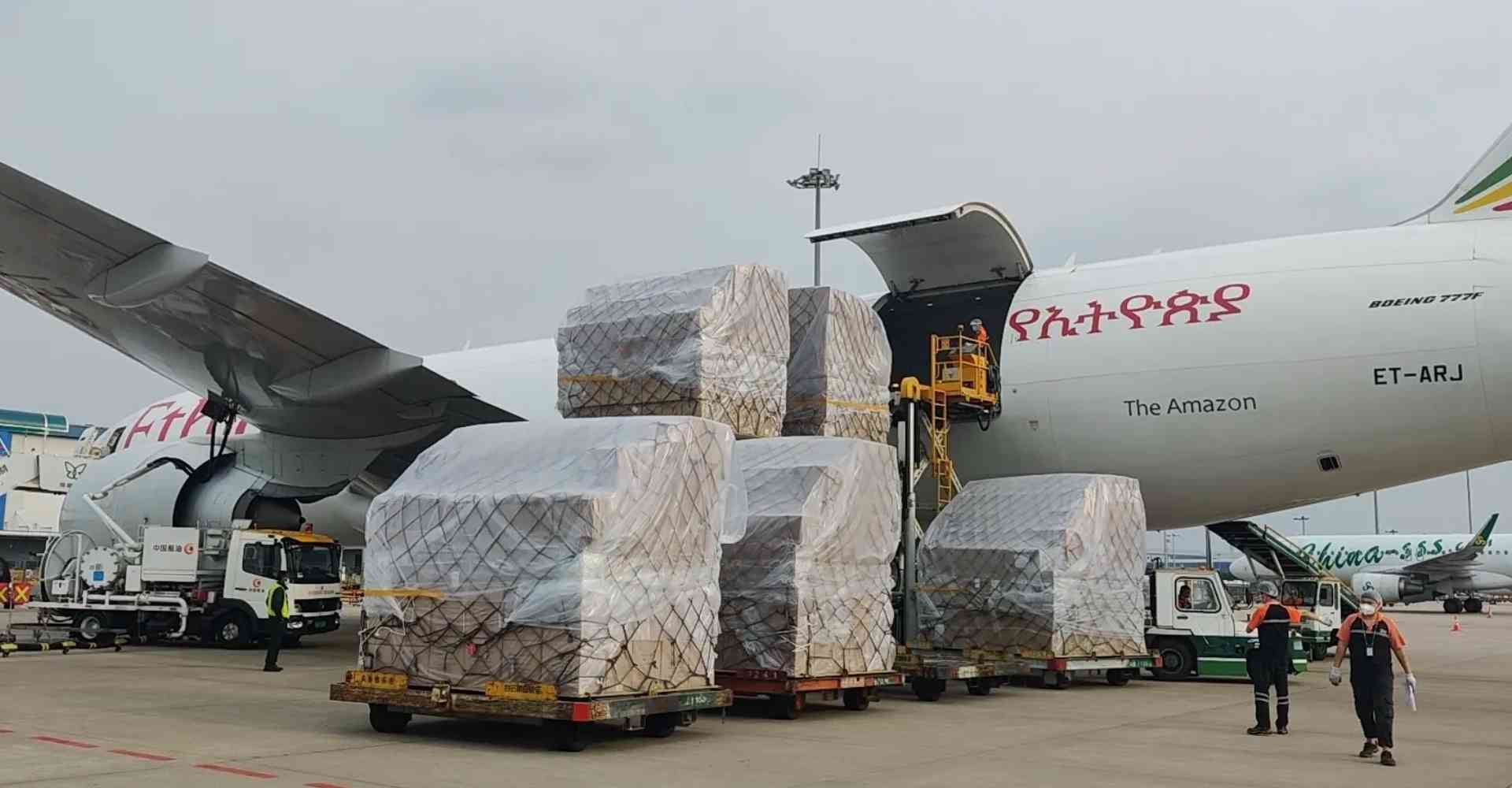
- Air freight: The fast lane. Air freight from China to USA gets cargo through in days once booked, but the per-kilogram price is far above sea. Choose it for high-value SKUs or a restock that cannot miss a sales window.
- Rail: There is no direct China-to-USA rail line. Rail becomes useful after your container lands on the U.S. West Coast and needs to move inland. For Chicago or Dallas-bound freight, ocean-plus-rail often beats the slower all-water route through the Panama Canal.
Whichever Incoterms you select, put them on the purchase order. 40% of first-time importers underestimate customs duties, often because the quote says one trade term but the shipment moves under another. Write the term into the order form and the supplier’s confirmation email.
Once the term is locked, build your document folder. The commercial invoice, packing list, and bill of lading or air waybill are the first files U.S. customs checks. Roughly 80% of import delays trace back to mistakes in these documents—missing HS codes, mismatched weights, or vague descriptions. Have your forwarder review drafts before cargo leaves the factory.
Match the shipping mode to the shipment
WanSea, based in Qingdao, handles FCL, LCL, air, and rail quotes under the same Incoterms. Qingdao sits close to major Asia-US shipping line calls, so your cargo enters the ocean leg quickly. A forwarder that asks about dimensions, final address, and Incoterms before quoting you is the one worth using for your first shipment.
Documentation
Roughly 80% of shipment delays trace back to documentation errors. Most of those errors live in two documents: the commercial invoice and the packing list. US customs clearance does not start when a container reaches Long Beach; it starts when these two documents leave the exporter’s desk.
Commercial Invoice & Packing List
The commercial invoice answers the questions US Customs will ask about every shipment from China: What is it? What is it made of? What is it worth? The packing list answers the follow-up: exactly how many cartons, what each weighs, and what sits inside each one. Both documents must agree with each other, and both must match the actual cargo.
- Description: Use language a customs officer can verify. “Glassware, 500 pcs per carton” is verifiable; “plastic items” invites a hold while someone asks what that means.
- Value: Declared unit prices must stay consistent across the invoice, packing list, and any prior orders. One inconsistent line triggers a value query that can last weeks.
- Currency and totals: A single RMB-versus-USD mix-up can stall an LCL shipment from China to USA before the box is even loaded.
- Consignee data: The buyer’s legal name and tax ID on the invoice must match the Bill of Lading exactly. A misspelled letter is enough to delay clearance.
This is where a forwarder earns its fee. WanSea’s office sits in Qingdao, at the origin port, so the team reviews the commercial invoice and packing list against the booking details the same day the exporter issues them. An error gets fixed in hours, not after the vessel is already on the water.
Bill of Lading / Air Waybill
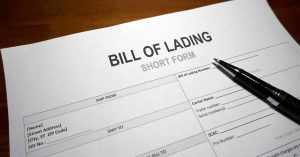
The Bill of Lading does three jobs: receipt for the cargo, contract of carriage, and — for sea freight — document of title. Whoever holds the original Bill of Lading controls the goods. An Air Waybill is different: it is a receipt and contract only, not a title document, so you never wait on paper to pick up an air freight shipment.
Spend five full minutes on the consignee block. That name must match your customs bond and ISF filing. If it does not, the shipping line issues an amendment — which costs money and adds days to door-to-door shipping from China to USA. For most first-time importers, asking for telex release or express release saves more hassle than waiting for the original B/L to arrive by courier.
Write this benchmark down: your documents pass the forwarder’s check the same day they are issued, and every field — description, carton count, weight, value, consignee name — matches the booking confirmation 100%. If the forwarder sends corrections, that is the system working. If you never see a draft Bill of Lading before the vessel sails, you are flying without instruments.
Customs Clearance
The U.S.
For an e-commerce importer new to shipping from China to the USA, customs clearance can feel like the most opaque part of the entire process. It does not have to be. Two things drive 80% of first-time delays: an incorrect product code and a mismatch between the commercial invoice and the actual goods. Both are preventable.
HS Code Classification
The U.S. uses the Harmonized System (HS) — a global product classification standard — but adds its own 8-digit HTS codes for duty assessment. Every product entering the country gets one, and getting it wrong changes both your duty rate and your likelihood of a physical examination.
- What shifts with the code: The first 6 digits are international; the final 2-4 digits are U.S.-specific. A single digit can take you from a 0% duty entry to a 12% duty entry. For a $50,000 shipment, that is a $6,000 swing — most first-time importers never see it coming.
- Why documents trigger delays: CBP officers compare the HTS code, the commercial invoice description, and the packing list as a set. If the invoice says ‘plastic storage bins’ and the code matches plastic housewares, you clear smoothly. If the wording is vague or the code does not match the description, the shipment gets flagged for a closer look.
- Base duty: The standard MFN import duty for the product, which depends on the correct HTS code.
- Section 301: An additional tariff on goods from China, currently 7.5% to 100% depending on the category. Most consumer goods fall in the 25% tranche, though some remain at 7.5%.
- AD/CVD: Antidumping and countervailing duties on specific products like furniture, paper goods, and certain metals — these can add double-digit percentages on top of everything else.
Duties, Tariffs, and Section 301 Updates
The 40% of first-time importers who underestimate their customs costs usually miss one key fact: Section 301 tariffs apply on top of the normal duty rate, not instead of it. That extra 25% on many consumer goods from China is stacked onto the base duty, plus the Merchandise Processing Fee (MPF).
This is where working with a forwarder who sees daily rate changes matters. Since 2018, the Section 301 tariff scope has shifted repeatedly — exclusions have expired, new product categories have been added, and product descriptions have been reworded. An HTS code list from a year ago is not reliable today.
The practical takeaway: ask your forwarder to check the current Section 301 scope before you place the purchase order, not after the goods are loaded. A forwarder with 10 years in the China-US lane sees the updates weekly and can factor them into a true landed-cost estimate. That is the difference between planning for customs clearance and being surprised by it.
Tracking and Delivery
A freight forwarder only earns their fee if your shipment clears customs on the first pass.
First-time importers usually think the freight forwarder’s job begins and ends with moving cargo. In practice, the real value sits in what happens before the container leaves the port. A forwarder handles booking, export documentation, customs clearance in both countries, and coordinates the inland legs. That matters because the margin for error is slim on a China-to-USA shipment.
Why Qingdao matters for your shipment
WanSea operates out of Qingdao, which gives direct access to major Asia-US shipping lines. That translates into more frequent sailing options and shorter transit times for cargo headed to Los Angeles, Long Beach, or Oakland. For an e-commerce importer moving LCL or FCL freight, the port choice influences both your total cost to ship a container from China to USA and your reliability window.
What a strong forwarder does on your behalf
- Visibility: You get proactive tracking updates, not just a BOL number. The best forwarders flag delays before they become disruptions.
- Compliance: They verify your HS code classification and ensure commercial invoice details match the packing list exactly. Mismatched documents are a top cause of customs holds.
- Flexibility: If your Amazon FBA shipment needs a last-mile carrier change, a forwarder with a local network can adjust without losing a week.
The documentation piece is where most delays happen. An incorrect weight or a vague product description on the commercial invoice will trigger a US customs exam that adds days. Having a forwarder that reviews your paperwork before the shipment sails is worth more than any discount on freight rates.
What to ask before you book
Ask the forwarder which US customs clearance broker they use and whether that broker will handle Section 301 tariff classification. Many e-commerce importers assume the freight cost includes everything, only to get a separate bill for duties or a customs bond. Confirm upfront whether your quote is DDP or DAP. A forwarder that can clearly map those responsibilities is worth keeping.
A forwarder is also your best source of truth for transit time expectations. Sea freight from China to the US West Coast typically runs 12-16 days, while East Coast shipments run 25-32 days via Panama. Air freight cuts that to days, but the air freight vs sea freight from China to USA cost difference is usually 4-6 times higher. Your forwarder should give you a realistic schedule and a price break, so you can decide what your product actually needs. For e-commerce inventory with a 30-day launch deadline, air freight is often justified. For replenishment stock, sea freight is the only sensible math.
Conclusion
The gap between a smooth first import and a costly delay usually comes down to paperwork and Incoterms, not just the freight rate. Getting the HS code right, building a buffer for Section 301 duties, and submitting a clean commercial invoice settle most problems before the vessel departs. That preparation is what keeps your shipment moving and your cost calculation accurate.
- Around 40% of first-time importers underestimate customs duties; add a 10–15% buffer to your landed cost.
- 80% of customs delays trace back to incorrect documentation; double-check the commercial invoice and packing list.
- Confirm your HS codes and Section 301 tariff exposure before scheduling shipment.
- A Qingdao-based forwarder like WanSea offers direct access to major Asia-US shipping lines.
Before you book your first container, pull the latest freight quotes and run the numbers against a documented benchmark. WanSea’s container cost page gives you a clear baseline for FOB and DDP scenarios, so you can spot any quote that hides fees behind a low headline rate. Use that data when you ask your freight forwarder for a detailed breakdown.
Frequently Asked Questions
What documents do I need to import from China to USA?
You need a commercial invoice, packing list, and the bill of lading or air waybill. Most customs delays are caused by errors in the invoice and packing list, so check them against. Send complete docs to your forwarder before the cargo arrives.
How do I choose between sea and air freight?
Choose sea freight for large or heavy cargo and air freight only when speed justifies the cost. LCL sea freight works best for first-time importers with smaller orders, while FCL is cheaper once you. Estimate total landed cost before picking a mode.
What are Incoterms and why do they matter?
Incoterms define who pays for freight, insurance, and customs clearance at each stage. For a first import, EXW puts all risk and cost on you, while DDP shifts most of it to the freight forwarder. Confirm Incoterms in writing before booking cargo.
How do I handle customs duties and Section 301 tariffs?
Duties are calculated from the HS code, customs value, and current tariff rates, including any Section 301 additions. Use a confirmed HS code before shipment and ask your forwarder to run a landed. Verify your HS code with a forwarder before booking.
Should I work with a freight forwarder on my first shipment?
Yes, because a forwarder handles bookings, documentation, customs clearance, and inland delivery from China to the USA. WanSea provides sea, air, rail, and door-to-door DDP services, which reduces the chance of. Ask your forwarder for a step-by-step shipment plan before you book.