

Global trade has grown at an increasingly rapid rate, and China became the global leading exporter, exporting everything from machinery and electronics to garments and auto components.
Among China’s biggest trading partners is Germany — Europe’s industrial behemoth. Due to the pressure of supply chains, Chinese air freight to Germany is a lifeline for firms requiring fast, efficient, and secure shipping.
In this guide, Air freight from China to Germany, we will describe everything you need to know about air freight from China to Germany, such as shipping time, cost, process, benefit, documentation, ban, and tips on how to make your supply chain most effective.
Why Use Air Freight from China to Germany?
Air freight is ideal for commodities that need to get there quickly and safely. Sea freight can be more affordable for bulk shipments, but air freight is valuable, particularly for industries where time equals money.
The most significant reasons for choosing air freight are:
- Speed – Air freight is 3–7 days, while sea shipping is 30–40 days.
- Reliability – Air carriers maintain a fixed schedule and have less likelihood of unforeseen delay.
- Security – Airports are extremely strict with customs and security checks, minimizing the threat of theft or damage.
- Accessibility – Germany has relatively few major international airports, making last-mile delivery affordable.
- Best for high-value cargo – Electronics, automobile parts, and medical equipment might require faster delivery and better handling.
Major Airports for Air Freight
Air freight plays a crucial role in international trade, especially for time-sensitive or high-value goods. China, being a global manufacturing hub, relies on its major airports to efficiently export products worldwide.
Selecting the right airport ensures faster transit, smoother customs clearance, and cost-effective shipping solutions for businesses and individual exporters.
Chinese Airports
There are a couple of international cargo airports in China that handle cargo that is destined for Germany:
- Shanghai Pudong International Airport (PVG) – It is one of the world’s busiest air cargo hubs.
- Beijing Capital International Airport (PEK) – Primary gateway for European cargo.
- Guangzhou Baiyun International Airport (CAN) – Central China’s primary logistics hub.
- Shenzhen Bao’an International Airport (SZX) – Renowned for electronics and consumer goods.
- Hong Kong International Airport (HKG) – Leading hub with excellent worldwide connectivity.
Airports in Germany
Germany is a key hub for European trade, with several major airports facilitating efficient cargo transport.
These airports handle a wide range of goods, from industrial products to perishable items, ensuring timely delivery across Europe and beyond. Choosing the right airport can significantly impact shipping speed, costs, and customs clearance efficiency.
Germany’s robust logistics infrastructure makes it ideally placed for European distribution:
- Frankfurt Airport (FRA) – Busiest cargo airport in Europe.
- Leipzig/Halle Airport (LEJ) – Geographical central point for DHL Express activities.
- Munich Airport (MUC) – Covers the manufacturing and trade of southern Germany.
- Cologne Bonn Airport (CGN) – Hottest e-commerce shipping hub.
Transit Time via Air Freight from Germany to China
Air freight from Germany to China offers one of the fastest shipping options for exporters and importers.
Transit times depend on factors such as the departure and arrival airports, flight schedules, customs procedures, and the nature of the cargo.
Understanding these timelines helps businesses plan inventory, manage costs, and ensure timely delivery.
Transit time is based on direct flights, customs clearance, and logistics carriers.
- Direct Flights: 3–5 days (from Frankfurt/Munich to Shanghai/Beijing/Guangzhou).
- Indirect Flights: 5–7 days (transit through hubs like Dubai, Istanbul, or Amsterdam).
- Express Air Freight (DHL, FedEx, UPS): 2–4 days.
For express deliveries requiring swift delivery, express freight is the fastest but at a higher rate.
Cost of Air Freight from China to Germany
Air freight costs from China to Germany vary widely depending on factors such as cargo weight and volume, the type of goods being shipped, the chosen airline or freight forwarder, fuel surcharges, and seasonal demand.
Understanding these cost components helps businesses budget accurately and select the most efficient shipping option for their needs.
Air freight rates are calculated based on either:
- Actual Weight (kg)
- Volumetric Weight (length × width × height ÷ 6000)
The higher of the two is used as the chargeable weight.
Average prices (2024 estimates):
- General cargo: $5–$8 per kg
- Express cargo: $10–$15 per kg
- Heavy/oversized cargo: Custom quotes
Cost determinants:
- Fuel surcharges
- Peak season demand (Sept–Jan)
- Route availability
- Type of goods (hazardous materials could be more costly)
Air Freight compared to Other Modes of Transport
Air freight offers speed and reliability compared to sea, rail, or road transport, making it ideal for high-value or time-sensitive shipments.
While generally more expensive, it reduces transit time significantly and minimizes the risk of damage or delays.
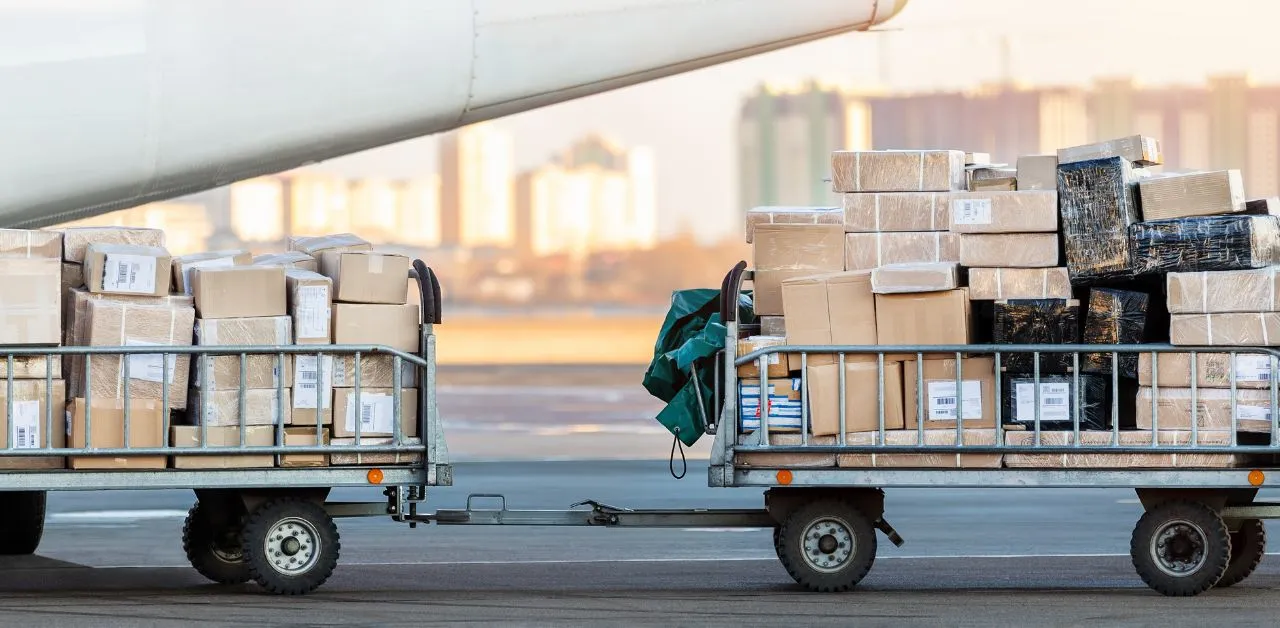
Comparing air freight with other modes helps businesses balance cost, efficiency, and delivery requirements.
| Mode | Transit Time | Cost | Best For |
| Air Freight | 3–7 days | High | Urgent, high-value, low-volume goods |
| Sea Freight | 30–40 days | Low | Bulk, heavy, non-urgent goods |
| Rail Freight | 15–20 days | Medium | Mid-sized cargo from northern/central China |
| Express Courier | 2–4 days | Very High | Small packages, e-commerce, urgent samples |
For German importers, air freight is the deciding factor between speed and security, particularly for electronics, machinery, and fashion goods.
Significant Industries Making Use of Air Freight from China to Germany
Air freight from China to Germany plays a crucial role in supporting industries that rely on fast, reliable, and secure transportation.
Sectors such as electronics, automotive components, pharmaceuticals, fashion, and perishable goods frequently use air cargo to maintain supply chain efficiency, meet tight deadlines, and respond to market demands.
The speed and predictability of air freight enable businesses to reduce inventory costs, quickly replenish stocks, and launch products in time-sensitive markets.
Understanding which industries rely heavily on air shipping highlights the strategic importance of this transport mode in fostering international trade between China and Germany.
- Automotive – Spare parts and components, machinery.
- Electronics – Smartphones, laptops, semiconductors.
- Pharmaceuticals – Temperature-sensitive products requiring cold chain logistics.
- Fashion & Textiles – Seasonal, high-demand items.
- E-commerce – Cross-border B2C and B2B shipments.
Documentation to be used in Air Freight
Proper documentation is essential for air freight shipments from China to Germany to ensure smooth customs clearance and compliance with international regulations.
Key documents include the Air Waybill (AWB), commercial invoice, packing list, export licenses, and certificates of origin.
Depending on the cargo type, additional documents such as hazardous material declarations or insurance certificates may be required.
Accurate and complete documentation helps prevent delays, fines, or shipment rejection, while also providing a clear record of the transaction between the shipper, carrier, and recipient.
Understanding required paperwork is critical for efficient and compliant air freight operations.
Clearance of goods from China to Germany involves proper documentation to ensure customs clearance.
- Commercial Invoice – Records seller, buyer, product description, and value.
- Packing List – Itemized list, weight, and dimensions.
- Air Waybill (AWB) – Shipper and airline’s transportation contract.
- Import Licenses (if required) – For restricted items.
- Certificates of Origin – Verifies country of origin of the product.
- Customs Declarations – For German and EU administrations.
Customs Clearance in Germany
Germany being a member of the European Union (EU) follows EU customs regulations. Import levies and taxes are levied based on the product’s HS Code.
- Value Added Tax (VAT): 19% (normal rate), 7% (lower rate for essentials).
- Customs Duties: As per the EU Tariff Code.
- Excise Duties: For alcohol, tobacco, and petroleum.
Importers will delegate the compliance and delay avoidance to customs brokers or freight forwarders.
Some Typical Problems in Air Freight from Germany to China
- High Cost – Air freight is much more expensive than sea freight.
- Limited Space – Space limitations during holiday seasons can cause delays.
- Customs Delays – Incomplete paperwork can cause clearance delays.
- Restrictions – Hazardous materials, batteries, and chemicals can be restricted.
- Currency Fluctuations – Exchange rate changes impact overall costs.
Successful China to Germany Air Freight Ideas
- Plan Ahead: Book early for best rates in busy months (Sept–Dec).
- Choose the Right Freight Forwarder: Seasoned associates reduce risk and ensure compliance.
- Optimize Packaging: Decrease volume to reduce chargeable weight.
- Track Shipments: Take advantage of airlines’ or forwarders’ tracking for visibility.
- Know Regulations: Be aware of EU and German import regulations.
- Shop Quotes: Get several quotes from freight forwarders for the best deal.
Role of Freight Forwarders
A qualified freight forwarder manages intricacies in shipping, including:
- Consolidating shipments
- Coordinating customs clearance
- Securing cargo insurance
- Negotiating good rates
- Providing real-time monitoring of shipments
Examples of leading forwarders include DHL Global Forwarding, DB Schenker, Kuehne + Nagel, and specialty China-to-Europe logistics firms.
Prospects for Air Freight from China to Germany
- Digitalization – Real-time shipment tracking and AI-based logistics planning.
- Sustainability – Investment by airlines in fuel-efficient aircraft and carbon offsetting programs.
- E-commerce Growth – Growing cross-border e-commerce driving air freight of small parcels.
- Belt and Road Initiative (BRI) – Facilitating China-Europe logistics connectivity.
- Automation – AI-based customs processing and automated cargo handling at airports.
Conclusion
Chinese air freight to Germany is a vital commerce artery to industries such as electronics, automotive, pharma, and e-commerce.
While costing more than sea or rail freight, speed, security, and reliability make it the natural choice for high-value, time-sensitive cargo.
With cooperation with experienced freight forwarders, correct documentation, and preplanning, companies can optimally maximize their supply chains while being competitive in global markets.
To importers wishing to enter Germany or streamline logistics, air freight remains an essential option for speedy, safe, and efficient transportation.
References
International Air Transport Association (IATA)
Lufthansa Cargo
Frankfurt Airport Cargo
DHL Global Forwarding
European Commission: Customs
Statista – China-Germany trade statistics