China requires an export licence for every used vehicle exported commercially, issued per VIN rather than per model. Before the licence is granted, the exporter needs five items: a transfer of registration marked for export, proof of clean ownership, a signed sales contract with after-sales terms, a third-party inspection report, and a destination-market compliance declaration. A separate rule applies to vehicles registered less than 180 days before the application: from 1 January 2026 the manufacturer must also issue a stamped after-sales service confirmation naming the destination country and service outlets. In the commercial used-car trade, individuals cannot run this process. Only a China-registered company approved by the local commerce authority as a used-car export enterprise can apply. This article covers the five documents, the two clocks that decide timing, and why the inspection report does not satisfy destination import approval.
The Two Compliance Systems Do Not Talk to Each Other
Most importers treat a car purchase as one compliance problem. It is two, and they run on different documents, different agencies, and different failure modes. The Chinese side asks whether the vehicle may lawfully leave. The destination side asks whether the vehicle may lawfully be registered and driven. Passing one tells you nothing about the other.
A Chinese export inspection report is a formal document from an accredited body, it carries the VIN, and it states that the vehicle meets the destination market’s access requirements. That wording reads like an approval. It is not. It is a declaration about market access prepared for the Chinese export authority, and a US port will still ask for the NHTSA declaration and the EPA form. An EU member state will still ask for a certificate of conformity or a national individual approval.
The table below separates the two systems by what each one actually controls.
| Question | Chinese export side | Destination import side |
|---|---|---|
| Who decides | Local commerce authority, then Chinese customs | NHTSA and EPA in the US; the type-approval authority or national approval body in the EU |
| What is checked | Ownership, inspection, contract, destination declaration | Safety standards, emissions, type approval, tariff classification |
| Key document | Export licence, issued per VIN | FMVSS compliance or registered importer approval; EU certificate of conformity |
| Who can act | Only an approved Chinese export enterprise, in the commercial trade | The importer of record, or a registered importer acting for them |
A car can clear the Chinese side and still be unregisterable at destination, or carry every destination approval and never obtain an export licence. The rest of this article is about the first half, because that is the half most importers never see. If you are still comparing routes, the general steps are in how to import a car from China.
Who Is Allowed to Export a Used Car from China
In the commercial used-car trade, an individual owner cannot sell a car overseas and arrange the export in their own name. China treats used-vehicle export as a licensed trade, and the licence application comes from an enterprise, not a person. The Ministry of Commerce sets the qualification categories and the document list.
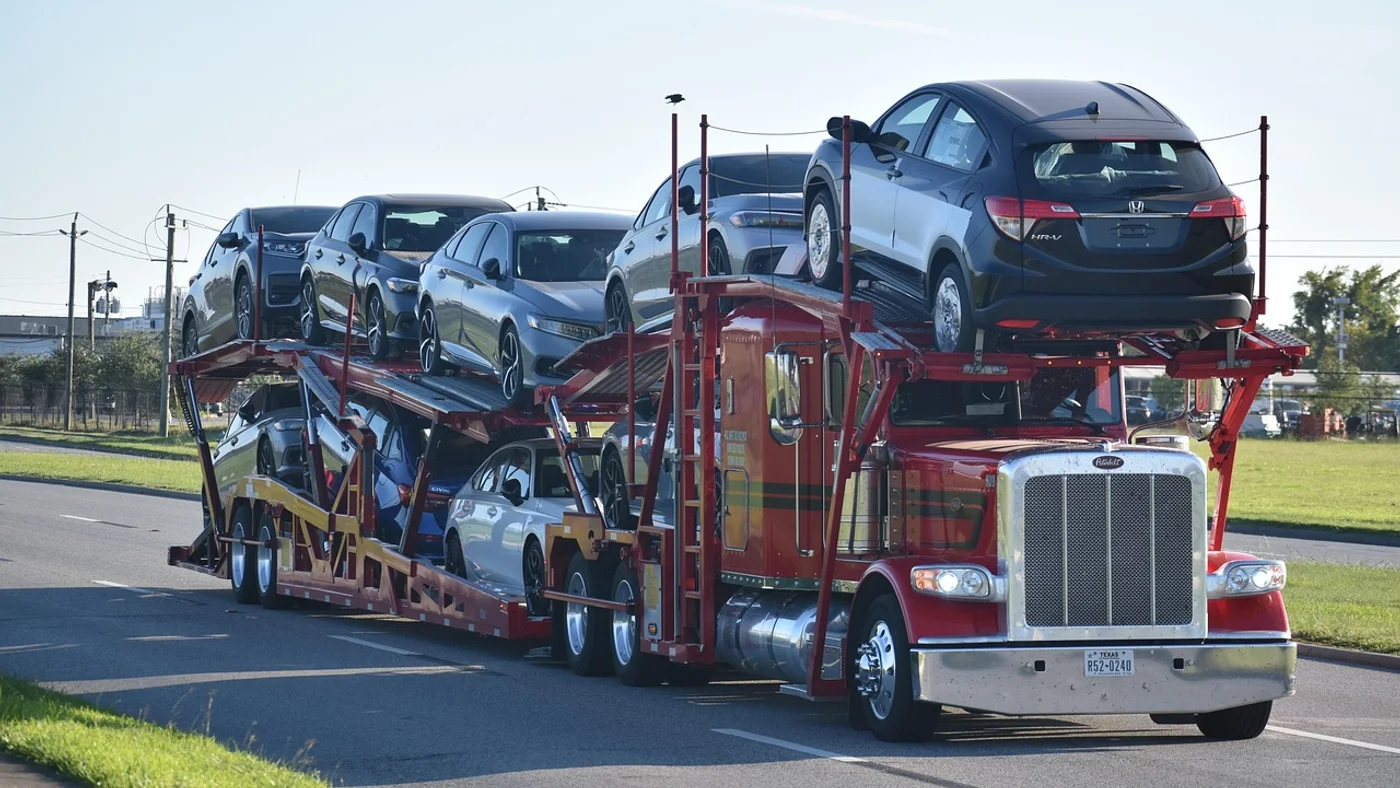
The categories are narrow: a qualified manufacturer exporting vehicles it produced, or a trading company with the premises, trading record, inspection capability, and compliance history the authority expects.
Separately, the exporter itself must show four entity-level prerequisites before filing: a Chinese business licence, a customs registration code, a used-car export qualification or filing with the local commerce authority, and access to a customs broker or an in-house customs function able to file the export declaration.
This matters practically. If the seller is a dealer without export qualification, the deal needs a second company in the chain, and that company becomes the exporter of record on the licence and the customs declaration. The name on the licence is the name the destination documents will be reconciled against. Getting that chain wrong stalls the shipment before it reaches a port.
The Five Documents Behind the Licence
The export licence is not the first document. It is the last one, and it is issued only after the five supporting documents are in place. The order explains the timeline.
- Vehicle registration certificate, transferred for export. The car must first be transferred to the Chinese export company and marked for export. The VIN, make, model, and owner details have to match across the registration certificate, the transfer record, and the sale contract.
- Proof of lawful ownership and source. A purchase invoice or equivalent ownership-transfer record. The vehicle cannot be stolen, illegally assembled, under seizure, pledged or mortgaged, or under customs supervision. Any of those states stops the application.
- Export sale contract. A legally effective contract with the overseas buyer, and it must include the after-sales service arrangement. A contract in a foreign language also needs a Chinese translation attached.
- Third-party inspection report. A vehicle-specific report from an eligible inspection body. It confirms the car meets the applicable Chinese used-car export standard and the destination country’s market-access requirements. This is the report that gets misread as destination approval.
- Destination-market compliance declaration. A stamped declaration from the exporter stating that the vehicle meets the import and technical requirements of the destination market. Like the inspection report, it is routinely mistaken for destination approval.
With those five in hand, the exporter applies for the export licence through the local commerce authority. The licence identifies the vehicle by VIN. Separately, the exporter or its broker files the customs export declaration, which must show the car as used and carry the VIN and vehicle details.
The inspection report deserves a second look. It is prepared against a Chinese export standard with a destination-market component, and it is not an FMVSS certification, an EPA certificate of conformity, or an EU type approval. A destination broker will not accept it in place of those. It satisfies the Chinese authority that the exporter considered the destination before the car leaves.
The 180-Day Rule and What It Is Actually For
From 1 January 2026, a vehicle whose Chinese registration date is 180 days old or less needs an extra document before the export licence will be issued: a stamped after-sales repair service confirmation from the manufacturer.
The confirmation has required content. It must name the destination country, identify the vehicle, and list the service outlets that will support the car in that market. It must be stamped by the manufacturer, not the dealer or the exporter. If the application information, including the registration date and the transfer-for-export date, does not match the registration certificate, the licence is not issued.
The rule is generally explained as a way to stop near-new cars moving through the used-car channel. A vehicle registered weeks before export is, in substance, a new car wearing a used label; the concern reported around the notice is that this competes with authorised distribution and muddies used-car export statistics. Either way, 180 days is the boundary the notice sets between a genuine used sale and a re-labelled new car.
For a buyer, the practical consequence is a timing trap. A car registered two years ago is fine; one registered four months ago needs a manufacturer letter that may be slow or impossible to obtain if the dealer is not an authorised outlet. Ask for the registration date before agreeing to a delivery schedule.
The video below covers the door-to-door leg that follows export clearance, including the handoffs where documents change hands.
After the Container Leaves: Deregistration and the Two-Month Clock
The Chinese process does not end at export clearance. Once customs has cleared the export, the exporter must apply to cancel the Chinese vehicle registration. The working window is generally two months, using the export declaration and the registration documents.

Two things block cancellation: outstanding traffic violations and unresolved accidents. A car with an open violation record cannot complete deregistration, which leaves the vehicle in an ambiguous state in the Chinese registry even though it has physically left the country.
This is the second clock, running the opposite way: the 180-day rule looks back at how long the car was registered, the deregistration window looks forward from the day the container clears.
A deregistration that was never completed is a document gap that surfaces later, usually when the buyer tries to prove the chain of ownership or when the vehicle’s history is checked in the destination market. The cancellation receipt is issued only after the export clears, so name it as a deliverable at booking and chase it inside the two-month window.
Why the Seller’s Inspection Report Will Not Clear Destination Customs
This is the single most expensive misunderstanding in the whole process, and it deserves its own section rather than a footnote.

The Chinese third-party inspection report says the vehicle meets the applicable Chinese used-car export standard and the destination country’s market-access requirements. An importer reads that sentence and concludes the destination side is handled. It is not. The report is a Chinese document, produced for a Chinese authority, describing a Chinese exporter’s understanding of a foreign market.
What the destination requires is a separate determination by its own regulator. In the United States, a vehicle under 25 years old must carry the manufacturer’s certification that it was built to the applicable Federal Motor Vehicle Safety Standards, or be determined eligible by NHTSA and brought into compliance by a Registered Importer. The EPA side runs on its own form and its own age threshold. In the European Union, a model needs whole-vehicle type approval, or the individual vehicle needs a national individual approval in the country where it will be registered. The US entry process itself is set out in 19 CFR Part 12, which covers the vehicle declaration and the bond.
None of those determinations can be made by a Chinese inspection body. A clean inspection report and a refusal at the destination port are compatible outcomes. The report satisfies the licence application; the import approval is answered by a different government.
The compliance declaration goes further back: it is the exporter’s written statement about the destination market, signed in China, with no destination authority party to it. Treat the two as parallel workstreams with separate owners. The exporter owns the Chinese licence, inspection, and deregistration. The importer owns the destination approval, the entry, and the registration. If the car travels with household goods inside it, the declaration split is covered in car belongings and customs. Neither can complete the other’s half, and no single document bridges them.
What to Ask Before the Deposit Leaves Your Account
Six questions cover most of the risk.

- Is the seller itself an approved used-car export enterprise, or is a second company acting as exporter of record? Get the name that will appear on the export licence.
- What is the Chinese registration date, and does it fall inside the 180-day window? If it does, has the manufacturer’s after-sales confirmation been requested yet?
- Which inspection body will issue the report, and does the report name the destination market you actually intend to use?
- Does the sales contract include the after-sales service arrangement, and is a Chinese translation attached if the contract is in English?
- Who will file the customs export declaration, and can you see the declaration once it is filed?
- Who completes the deregistration after export, and will you receive the cancellation receipt within the two-month window?
For the shipping leg itself, the booking options and cut-offs are on our sea freight service page. A supplier that answers all six quickly has done this before; one that answers three and deflects is describing a process it has not run.
The Export Licence Opens the Gate; It Does Not Certify the Car
China’s used-car export control is a licensing system with a document chain: transfer of registration, clean-ownership proof, a contract with after-sales terms, an inspection report, a stamped destination declaration, then a VIN-level licence, a customs declaration, and deregistration. The 180-day rule adds a manufacturer letter for recently registered vehicles, and in the commercial used-car trade the whole chain can only be run by an approved Chinese export enterprise, never by the overseas buyer and never by an individual seller.
What the licence proves is that the car may leave China. It says nothing about whether the destination will let it in, register it, or insure it. Those are decided by a different regulator, on a different document, under a different standard. Importers who plan the two tracks in parallel, with separate owners and separate deadlines, avoid the failure mode where a fully licensed car arrives at a port it can never leave.
Next step: send the VIN and the Chinese registration date to our team before the deposit, and we will confirm which documents the export licence will require and whether the 180-day rule applies.