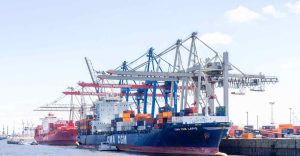

With good trade relations, increasing demand for Chinese products, and a strategic geographical location in the Middle East, Saudi Arabia (KSA) is presently among the leading markets for Chinese-origin products.
From the perspective of a new importer or an old businessperson, it is essential to have the export shipping logistics, policies, and best practices from China to KSA in order to make effective and cost-efficient deliveries.
How Shipping from China to KSA, this comprehensive guide has all the things you would like to export from China to Saudi Arabia, including modes of transport, transit time, documents, customs clearance, incoterms, charges, and freight forwarder work tips.
Why Import Shipping from China to KSA (Saudi Arabia)?
China is the largest manufacturing hub in the world with a reputation for producing electronics, machinery, textiles, and consumer goods at low cost.
Saudi Arabia, as part of Vision 2030 transformation, seeks to diversify its non-oil economy and trade, and Chinese products are in demand in the retail, construction, and industrial markets.
China’s high-value imports to KSA are:
- Electronics and electrical appliances
- Machinery and mechanical equipment
- Furniture and housewares
- Clothing and textiles
- Automotive accessories

Modes of Shipping: Sea Freight and Air Freight
Both shipping from China to Saudi Arabia is feasible by two major modes of shipping: sea freight and air freight.
A. Air Freight
- Suitable for: Low quantity, high value, or perishable items of time-sensitive nature
- Transit time: 3 to 7 days
Main airports:
- China: Guangzhou Baiyun, Shanghai Pudong, Beijing Capital
- Saudi Arabia: Riyadh King Khalid, Jeddah King Abdulaziz, Dammam King Fahd
- Advantages: Fast delivery, low insurance price, perfect for perishables
- Drawbacks: Low price, high cargo capacity
B. Sea Freight
- Most suitable for: Heavy and bulk cargo
- Transit time: 20 to 35 days (dependent on route and port)
Major ports:
- China: Shenzhen, Guangzhou, Ningbo, Shanghai
- KSA: Jeddah Islamic Port, King Abdulaziz Port (Dammam), King Fahad Industrial Port (Yanbu)
- Advantages: Cheap for bulk cargo, perfect for full container load (FCL) and less than container load (LCL)
- Cons: Longer delivery time, requires customs clearance and port handling

Shipping Modes: FCL vs. LCL
When ocean shipping, you get to choose between:
FCL (Full Container Load)
- You are paying for the entire container
- Ideal for large-volume shipments
- More secure and less expensive for bulk loads
LCL (Less than Container Load)
- You are splitting the container with other importers
- Ideal for small businesses or low-volume goods
- Gentle longer transit time because it gets consolidated

Export Documents to be submitted to Saudi Arabia
For smooth customs clearance, valid documents are needed. Some common documents that are typically required are:
- Commercial Invoice
- Packing List
- Bill of Lading (B/L) or Airway Bill (AWB)
- Certificate of Origin (preferably Chamber of Commerce)
- SASO Certificate (Saudi Standards, Metrology and Quality Org.)
- Certificate of Insurance (where necessary)
- Import License (dependent on product type)
Understanding Saudi Customs Clearance Procedure
The Zakat, Tax and Customs Authority (ZATCA) performs the process of import in KSA.
Important points:
- Registration on the FASAH platform is compulsory for all importers
- VAT (15%) is charged on the majority of the imported products
- HS codes and product classification must be accurate
- Non-compliant goods can be refused, penalized, or even destroyed
- It is advisable to hire a local customs broker or a freight forwarder having KSA experience.
Popular Incoterms Used in China-KSA Trade
Incoterms (International Commercial Terms) establish sellers’ and buyers’ obligations during international shipping.
Common incoterms are:
- FOB (Free On Board): Seller ships the goods to the port; the buyer handles freight and customs
- CIF (Cost, Insurance and Freight): Seller arranges shipping to KSA port
- DDP (Delivered Duty Paid): Seller arranges everything, including customs and last-mile delivery
Tip: DDP suits first-time importers but usually comes with a higher premium charge.
Approximate Shipping Time between China and Saudi Arabia
- Shipping Mode
- Rough Transit Time
- Air Freight
- 3 to 7 days
- Sea Freight (FCL)
- 20 to 30 days
- Sea Freight (LCL)
- 25 to 35 days
Delays are due to customs inspection, holidays, or congestion at ports.

Cost Breakdown: Factors that Determine Shipping Rate
Shipping costs may vary with a myriad of factors:
- Mode of transport (air or sea)
- Container size (20ft, 40ft, LCL)
- Distance and shipping route
- Customs fee and VAT
- Storage and handling fees
- Similar to these, many more such factors may influence shipping costs.
- Seasonal surcharges (e.g., Chinese New Year, Ramadan)
Tip: Always request at least two freight forwarders to quote and add hidden charges.
Using a Freight Forwarder
A good freight forwarder simplifies shipping by handling:
- Booking freight space
- Preparing documents
- Customs brokerage
- Tracking and delivery
- Dealing with delays or disputes
When choosing a freight forwarder, look for:
- China-KSA shipment experience
- Saudi customs regulatory knowledge
- Clear pricing
- Both-country agents network
First-Time Importer Tips
Be cautious regarding product prohibitions: Some products (alcoholic drinks, pork, religious publications) are strictly forbidden
- Use Alibaba Trade Assurance or trustworthy suppliers
- Have a Saudi customs broker to avoid non-compliance
- Arrange for longer transit times during Chinese holidays (Chinese New Year, Golden Week)
- Ensure your shipment, especially for high-value items
Major Cities and Sectors Importing China into KSA
- Riyadh: Building materials, electronics, textiles
- Jeddah: Auto accessories, furniture, household goods
- Dammam: Industrial gear, equipment, chemicals
They are linked by important ports and are large trade and distribution hubs.
Conclusion
China to Saudi Arabia shipping is an essential supply chain link to most importers who wish to take advantage of the manufacturing capabilities of China and the expanding consumer and industrial market in Saudi Arabia.
Understanding your shipping choices, documentation requirements, and customs requirements enables you to ship on time and with cost-effective logistics.
Regardless of what you are importing, whether it is electronics, machinery, or clothing, having qualified customs brokers and freight forwarders will ease the task.
Keep yourself abreast with Saudi regulations regarding imports and maintain good contacts with China and KSA authorities.
References
Zakat, Tax and Customs Authority (ZATCA)
General Authority of Foreign Trade (GAFT)
Saudi Arabian Standards Organization (SASO)
China Council for the Promotion of International Trade (CCPIT)