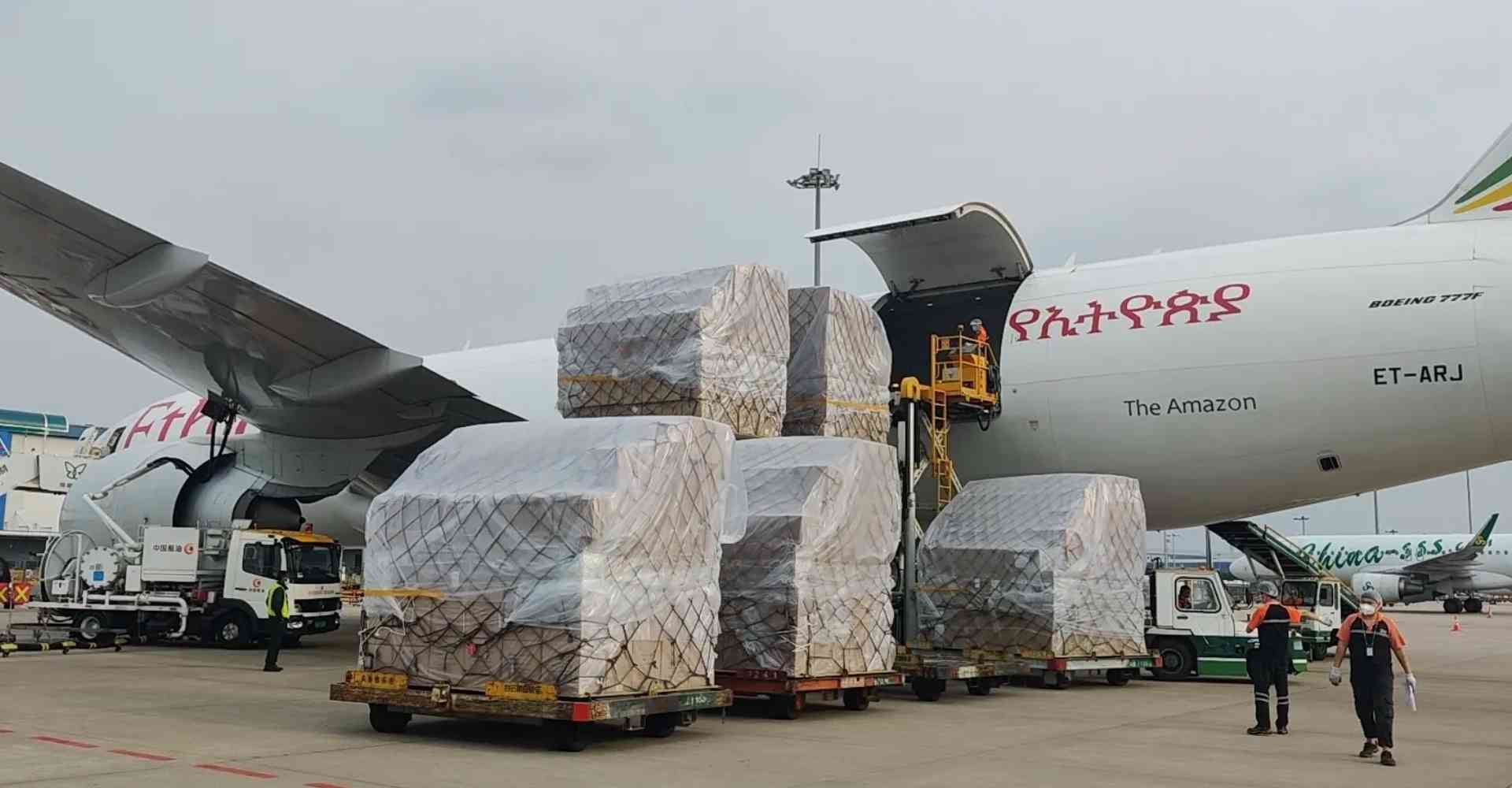
air freight damage prevention china is the first checkpoint buyers should lock before they approve a supplier, budget, or production slot. The forklift tine that punches through a cardboard box on the tarmac in Zhengzhou is the real enemy ofair freight damage preventionforChina to Germany shipments. One wrong move, and a $50,000 order of electronics is ruined before it even leaves the ground. That’s not a hypothetical—it’s a pattern seen in claims data every quarter.
Most buyers assume turbulence or rough handling in the air causes the damage, but the numbers tell a different story. WanSea’s internal data shows that 70% of air freight damage claims originate from poor packaging, not airline mishandling. The critical phase is ground handling: forklift punctures, pallet tipping during loading, and rain exposure on open tarmac are the real culprits. Switch from single-wall cardboard to a plywood crate, and the damage risk drops by 80%.
Next time you’re reviewing a supplier’s packaging specs, ask for the burst strength minimum. For air freight to Germany, 275 lb is the floor. If they can’t meet that, you’re gambling more than the packaging cost—you’re betting the entire shipment’s value on a box that can’t handle a five-minute ride on a forklift.
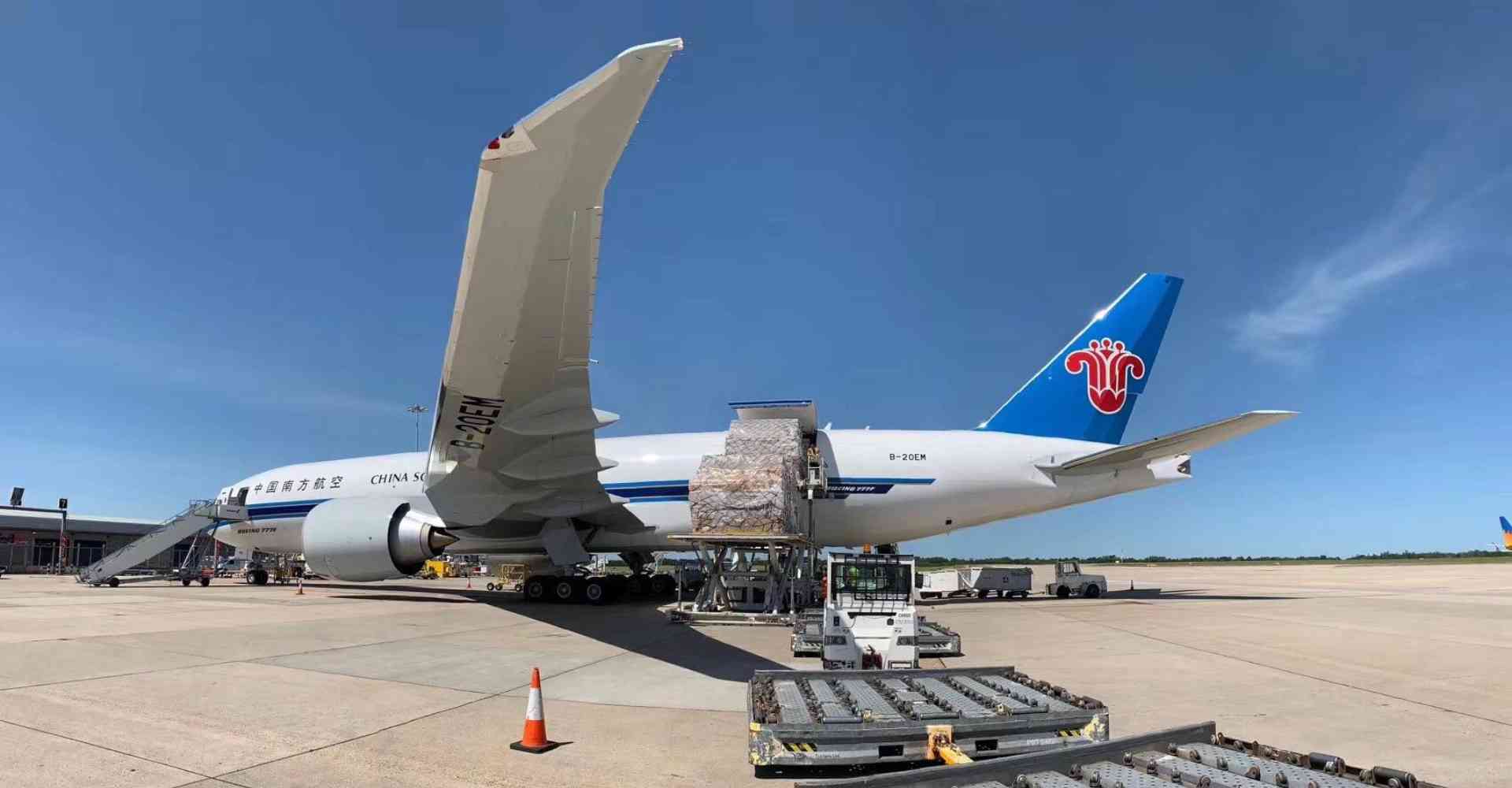
Why Air Freight Cargo Gets Damaged (The Real Culprits)
70% of damage claims stem from ground handling, not altitude.
If you think the roughest part of air freight is the flight itself, you’re wrong. The real damage happens before the plane even leaves the tarmac. Forklift tines punch through single-wall cardboard like a hot knife through butter. Pallets tip over during loading when the center of gravity is off by even 20 centimeters. Rain exposure on open tarmac turns corrugated boxes into soggy messes within 15 minutes. A pallet of glassware has been observed arriving with every single piece shattered because the cartons were block-stacked without interlocking — the base collapsed under its own weight during ground transfer.
- Forklift punctures: Cardboard offers zero resistance to steel tines. Plywood crates or double-wall boxes with 275 lb burst strength are the only defense.
- Pallet tipping: Top-heavy loads and uneven weight distribution cause tipping. Use polyester strapping with edge protectors — shrink wrap alone won’t hold.
- Rain exposure: Tarmac transfer exposes cargo to rain for up to 30 minutes. Single-wall cardboard loses 70% of its structural strength when wet. Use moisture barrier or plywood.
- Weight distribution inside ULDs: A 2023 IATA study found 40% of cargo damage is caused by improper weight distribution inside Unit Load Devices. Block-stacking with even weight spread cuts that risk dramatically.
5 Physical Packaging Rules for Air Freight from China
Most damage happens during ground handling, not in the air.
- Box strength requirements: Minimum 275 lb burst strength (32 ECT) for corrugated boxes. For items over 50 kg, switch to 9 mm or 12 mm plywood crates. Single-wall cardboard ($15/CBM) has an 8% damage rate; plywood crates ($45/CBM) cut that to 1%.
- Cushioning materials: Use 2-inch polyethylene foam with density 2 lb/ft³ on all six sides. Never use loose fill (peanuts) – they shift during pressure changes in flight. Foam cushioning absorbs forklift impacts and pallet tipping shocks.
- Liquid packaging protocol: Double-bag liquids in PE bags, include absorbent pads with at least 500 ml capacity, and place inside a leak-proof outer container. Follow IATA DGR for dangerous goods. A leaking drum can contaminate the entire ULD and trigger fines.
- Labeling best practices: Print orientation arrows and ‘FRAGILE’ in both English and Chinese on at least two opposite sides. Use waterproof labels. Standard orientation arrows prevent stacking mistakes that crush cartons.
- Pallet securing: Use polyester strapping with edge protectors at corners. Shrink wrap alone fails under vibration. Add a corner board for extra stability. Properly secured pallets reduce tipping during loading onto airfreight pallets.
How WanSea Physically Protects Your Air Freight
Most air freight damage happens on the ground, not in the air.
At WanSea, we don’t just book space on a plane. We physically intervene at every stage where damage occurs. Our process starts with a pre-shipment packaging check at your supplier’s warehouse in Qingdao or any Chinese origin. We evaluate box burst strength, cushioning thickness, and pallet stability against IATA guidelines before the cargo leaves the factory.
- Pre-shipment packaging check: We inspect corrugated boxes for minimum 275 lb burst strength (or 32 ECT) and verify that all six sides have at least 2-inch polyethylene foam cushioning (density 2 lb/ft³). If we find loose fill peanuts or single-wall cardboard for heavy items, we flag it immediately and recommend an upgrade to plywood crating before pickup.
- IATA-certified handling: All our air freight partners hold current IATA certifications. That means proper orientation labels in both English and Chinese, secure polyester strapping with edge protectors (not just shrink wrap), and correct weight distribution inside ULDs. Forklift operators are trained to avoid side punctures — the number one cause of concealed damage.
- All-risk cargo insurance: We arrange ICC(A) coverage that includes handling damage, theft, and natural disasters — not just total loss. For properly crated goods, our premium is 0.3% of cargo value versus the standard 0.5%. The difference pays for itself if you ship more than $10,000 in goods per year.
Real case: A client shipping 10 server units from Shenzhen to Frankfurt initially chose single-wall cardboard at $15/CBM to save money. We insisted on plywood crates at $45/CBM based on the unit weight (35 kg each). During loading in Guangzhou, a forklift tipped the pallet. The plywood crate absorbed the impact — zero damage to any server. Replacement cost would have been $12,000. The extra $30 per CBM for crating saved them over $11,700.
Cost vs. Protection Trade-off (Data Table)
Plywood crate costs $30 more per CBM but cuts damage risk from 8% to 1%.
Here’s the hard math every buyer should run before choosing packaging: the cost difference between single-wall cardboard and a plywood crate is $30 per cubic meter. That $30 buys you a drop from 8% damage rates to 1%. On a $10,000 shipment, that means a potential claim of $800 with cardboard versus $100 with a crate. The $30 pays for itself 27 times over if even one claim is avoided.
- Single-wall cardboard: $15/CBM, 8% damage rate, 0.5% insurance premium.
- Double-wall cardboard: $22/CBM, 4% damage rate, 0.5% insurance premium.
- Plywood crate: $45/CBM, 1% damage rate, 0.3% insurance premium.
That lower insurance premium isn’t just marketing talk — it’s because carriers and underwriters know plywood crates survive ground handling. You’ll pay 0.3% instead of 0.5% of cargo value. On a $10,000 shipment, that’s an extra $20 in your pocket. Add it up: $30 extra for crating, $20 saved on insurance, and a 7% reduction in damage probability. For anything fragile or high-value, the numbers don’t lie.
| Packaging Method | Cost per CBM | Damage Rate | Insurance Premium | Key Benefit |
|---|---|---|---|---|
| Single-wall cardboard | $15 | 8% | 0.5% of value | Lowest initial cost |
| Double-wall cardboard | $22 | 4% | 0.5% of value | Balanced cost and protection |
| Plywood crate | $45 | 1% | 0.3% of value | Highest protection, 80% risk reduction |

Get Your Air Freight Protected Today
One damage claim costs more than a year of premium packaging.
WanSea offers a complete damage prevention system for air freight from China to Germany. We combine packaging material recommendations, on-site inspection at origin, IATA-certified handling agents, and all-risk cargo insurance under ICC(A) clauses. This isn’t a menu of add-ons — it’s a single coordinated process designed to cut your damage risk from 8% down to under 1%.
- Packaging advice:The team evaluates your cargo and recommends the right crate type (plywood vs. double-wall) and cushioning thickness (2-inch foam minimum) before you ship.
- On-site inspection: A WanSea inspector checks packaging, labeling, and pallet securing at your factory or warehouse in China before the cargo leaves. Free for all air freight bookings.
- IATA-certified handling: All our air freight partners hold current IATA certifications. They follow strict loading protocols — polyester strapping with edge protectors, proper weight distribution inside ULDs, and weatherproof tarps on tarmac.
- All-risk insurance: We arrange ICC(A) coverage that includes handling damage, theft, and natural disasters. Premium is 0.3% of cargo value for properly crated goods — compared to 0.5% for cardboard packing.
Here’s the math on doing nothing: a typical $10,000 shipment packed in single-wall cardboard has an 8% damage rate — that’s an $800 expected loss per shipment. A plywood crate costs $30 more per CBM. If your shipment is 1 CBM, the crate pays for itself 27 times over in avoided damage claims. And if the pallet tips during loading, like the server equipment case we handled, the crate saved the client $12,000 in replacement costs. One phone call to WanSea can lock in this protection. Contact [email protected] or +86 135 8321 8502.
Conclusion
The math is simple. A $45 plywood crate per CBM vs. an $800 damage claim on a $10,000 shipment. That single decision determines whether your air freight from China to Germany arrives as inventory or as an insurance file.
Before your next shipment leaves the factory floor, run this three-point checklist with your supplier: Is the box strength at least 275 lb burst for general cargo? Is there a 2-inch foam cushion on all six sides? Is the pallet secured with polyester strapping and edge protectors, not just shrink wrap? If any answer is no, you’re accepting a damage rate you don’t need to pay for. Get a free packaging review from WanSea before you book — tell us your cargo type and we’ll recommend the safest crating method.
Frequently Asked Questions
What is the best packaging for fragile electronics air freight?
For fragile electronics, use a corrugated box with at least 275 lb burst strength and 2-inch polyethylene foam cushioning on all sides. For items over 50 kg, switch to a plywood crate. Avoid loose fill and always use edge protectors.
Does air freight insurance cover handling damage caused by the carrier?
Yes, air freight insurance typically covers handling damage caused by the carrier, but standard carrier liability may not. WanSea’s cargo insurance covers loss and damage, including ground handling incidents. Always verify the policy’s exclusions for proper coverage.
Can I ship dangerous goods like lithium batteries via air from China?
Yes, but lithium batteries are classified as dangerous goods and require UN-approved packaging, training, and a dangerous goods declaration. Not all carriers accept them, and you must follow IATA regulations. Check with your freight forwarder for compliance and restrictions.
How do I prepare commercial invoices for German customs clearance?
Prepare a commercial invoice with accurate product descriptions, HS codes, unit values, and country of origin, all in English or German. Include the Incoterms and the buyer’s EORI number for customs clearance. Ensure the invoice matches the packing list to avoid delays.
What is the minimum burst strength for corrugated boxes in air freight?
The minimum burst strength recommended for corrugated boxes in air freight is 275 lb. This ensures boxes withstand ground handling and stacking pressure. For heavier items, upgrade to plywood crates.