LCL to Hawaii runs either direct to Honolulu or through a mainland gateway, and which one you buy is fixed by the port of discharge on the booking — not by the forwarder’s sales language. That single field sets the first US port, whether a second CFS touches your cargo, and whether the domestic sea leg falls under the coastwise rules at 46 U.S.C. § 55102. On a gateway routing, where the entry is filed is a separate election made later. A forwarder quoting Hawaii on a mainland tariff has already chosen a structure, written down or not. This article covers what that structure is, how to read it off a quote, and what changes if you declare the destination late.
Hawaii Is a US Customs Destination but Not a US Mainland Lane
For duty and entry purposes, Honolulu behaves like any other US port: an entry is filed, duty and fees are assessed, and CBP releases or examines the shipment. What Hawaii adds sits outside CBP’s entry — the state’s plant quarantine branch inspects inbound plants, plant products, and soil after federal release.
For ocean transport the picture splits. Hawaii sits outside the mainline trans-Pacific network. Direct China-to-Honolulu consolidations exist but are thin, so a direct sailing often means waiting for a co-loader building a box for that port. The alternative is to consolidate in China into a vessel bound for a mainland gateway, deconsolidate there, and move the cargo onward to Honolulu on a separate domestic service. That model is where the cost structure changes: a second CFS, a second measurement, and a domestic leg priced on coastwise capacity rather than the international tariff. A third shape — transshipment at an Asian hub onto a Hawaii service — never touches the mainland and never triggers the coastwise clause.
什麼 “預訂” Actually Locks In
The booking is not only a space reservation. In an LCL chain the booking confirmation fixes, and the master bill later states, the port of discharge — where the carrier’s responsibility ends and the domestic arrangement begins. The rest follows: one CFS touch in Honolulu, or one at a mainland gateway plus a second in Honolulu. Under a mainland-gateway booking, where the entry lands is the one part the booking does not fix; that is settled later, when the entry or the in-bond is filed. Under a gateway routing the master bill terminates at the mainland port and does not name the domestic feeder.
Change the destination after the container is built and none of it moves with the change. The cargo is already inside someone else’s box, stowed to the co-loader’s container loading plan, and declared on a master bill naming a discharge port. Extracting it means devanning, re-measuring, re-packing, re-documenting, and finding space on a different service — each a billable event, none in the original quote. A forwarder can sometimes amend a destination before the box is built, which is why timing matters. A shipment booked as “美國” and re-routed later arrives with a second set of CFS charges nobody predicted.
這 freight forwarding services we run from China name the discharge port before the cargo is collected.
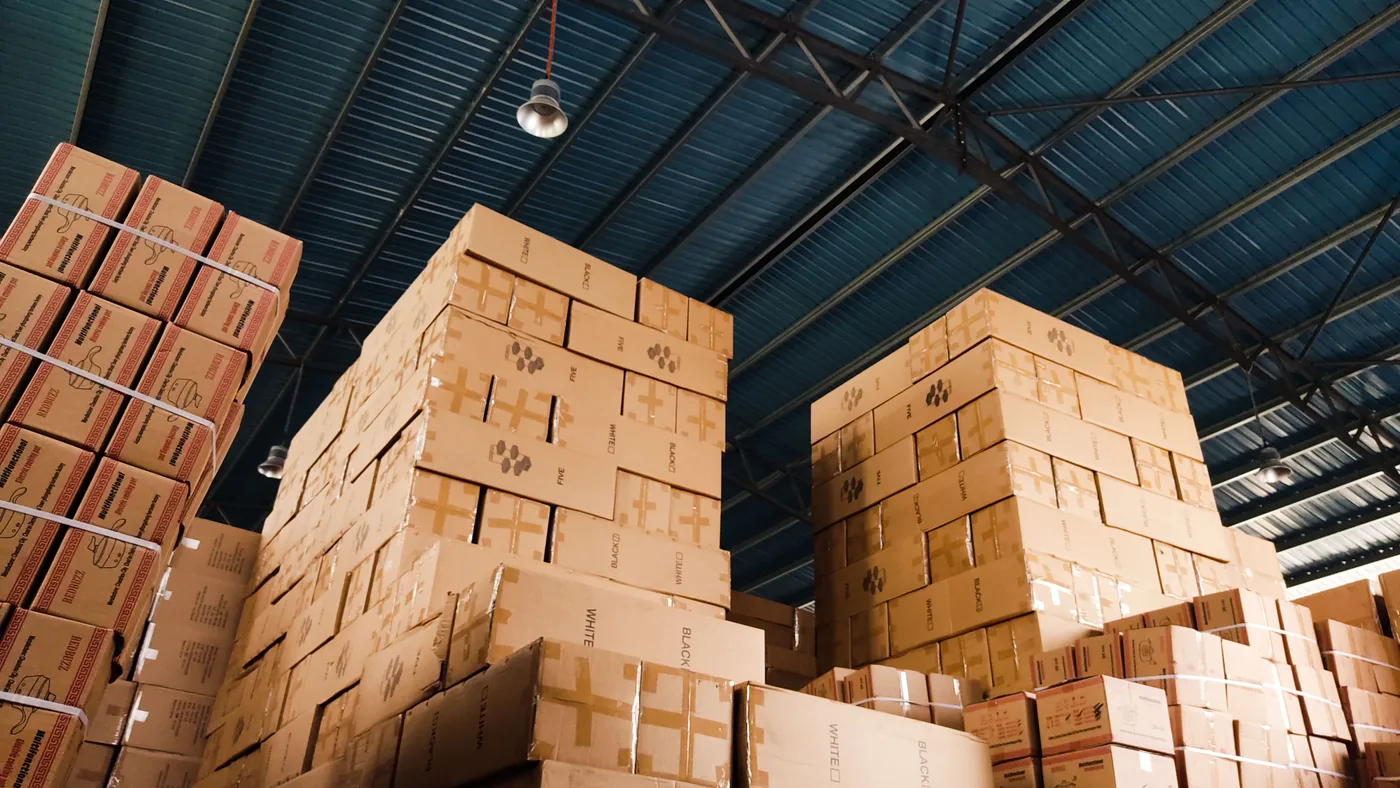
Cartons stacked to the shed roof. This is the shape of a CFS before devanning — the outer dimensions of each carton, not the product inside, set the billable volume.
The Two Structures, Written Out
Most China-to-Hawaii LCL shipments follow one of two shapes. Ask which one your quote describes, using port names rather than service names.
| Stage | Structure A: Direct | Structure B: Mainland gateway |
|---|---|---|
| 起源 | China CFS, consolidated | China CFS, consolidated |
| Ocean leg | China to Honolulu | China to Los Angeles / Long Beach or another gateway |
| First US port | Honolulu | Mainland gateway |
| CFS touches | One, in Honolulu (Oahu); a neighbor island adds a separate inter-island arrangement | Two: gateway and Honolulu |
| Customs entry | Honolulu | Gateway, or in-bond to Honolulu |
| Domestic sea leg | None for Oahu; inter-island move for a neighbor island, coastwise rules apply to it | Gateway to Honolulu, coastwise rules apply |
| Extra failure points | Direct sailing frequency | Gateway dwell, re-stuffing, missed connection |
Structure A is simpler and carries fewer handoffs. Its weakness is schedule: if no co-loader is building a Honolulu box the week your cargo is ready, the shipment waits. Structure B has more frequent departures but pays with a gateway receiving cycle plus a coastwise rate on the onward leg. Neither is automatically cheaper, and a quote showing only a low per-CBM ocean rate may describe Structure B, because gateway handling and the domestic leg can sit outside that number. We publish no Hawaii per-CBM rate here — gateway and coastwise capacity move it too far for one figure to be honest.
Why the Coastwise Rule Applies to One Leg and Not the Other
The coastwise statute is narrower than the way it is usually described. It bars a vessel from providing any part of the transportation of merchandise by water, or by land and water, between points in the United States to which the coastwise laws apply — either directly or via a foreign port — unless the vessel is wholly owned by US citizens for the coastwise trade and holds a certificate of documentation with a coastwise endorsement, or is exempt from documentation but would otherwise be eligible. Hawaii is inside that set of points, which is why a mainland-to-Honolulu sailing needs a coastwise-endorsed vessel and a China-to-Honolulu sailing does not.
A direct China-to-Honolulu voyage is not transportation between two US points. It is an international movement, and the vessel may be foreign-built, foreign-owned, and foreign-flagged.
The moment your cargo is discharged at a mainland gateway and reloaded for Honolulu, the second leg becomes transportation between two US points and needs a vessel meeting the coastwise requirements. The consequence is a smaller pool of ships, fewer sailings, and a rate that reflects both. Section 12103 sets which owners may document a vessel — US citizens or US-controlled entities, at least 5 net tons, not already documented under a foreign flag; the endorsement itself issues under 46 U.S.C. § 12106。
Two things follow that forwarders rarely say plainly. Your Chinese-origin goods do not become American goods, and the coastwise rule does not change their origin or duty — it regulates the vessel, not the cargo. And not every line labeled a Hawaii surcharge is caused by the coastwise rule: terminal handling, CFS work, documentation, and delivery would exist either way.
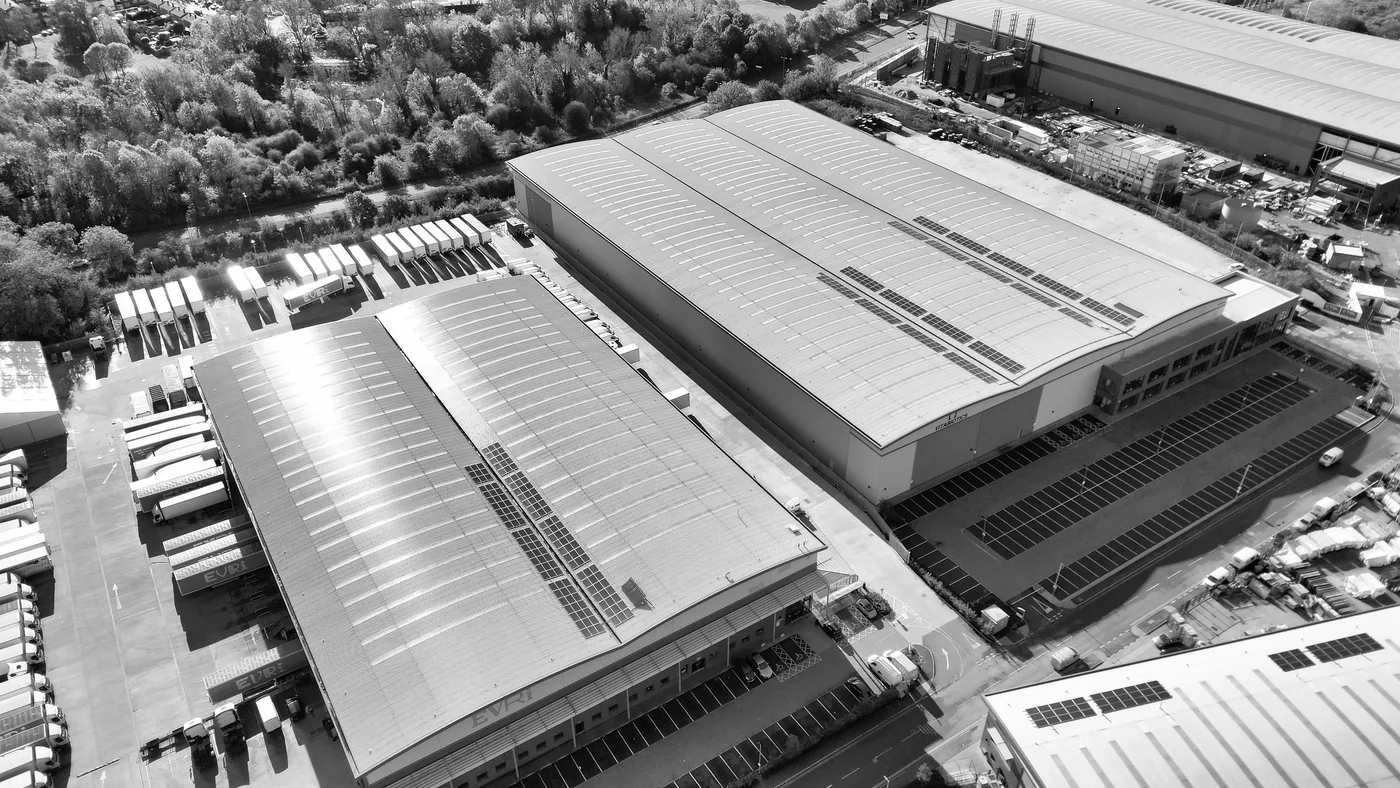
A mainland gateway looks like this: a large receiving warehouse with trucks cycling through. Your cargo enters and leaves it under a second house of paperwork.
Where the Customs Entry Lands
Under Structure A, Honolulu is the first US port of arrival, so the entry is filed there. The carrier files the manifest before loading and transmits the vessel stow plan and container status messages on the schedule CBP sets; your broker files the Importer Security Filing before the cargo loads in China and the entry after discharge. The entry summary process is the same one that applies at any other port.
Honolulu is on Oahu. If the consignee is on Maui, Kauai, or Hawaii Island, the ocean leg ends at Honolulu and the cargo moves again on an inter-island barge. That move is domestic, so the same coastwise test applies, and it is booked separately — priced outside both structures above. It is also where a shipment quoted “to Hawaii” can still arrive on the wrong island.
Under Structure B, two possibilities are not equivalent:
- Entry at the gateway. Duty is assessed and paid at the gateway; the cargo then moves to Hawaii as domestic freight. Simpler administratively, but commits you to the gateway’s exam and storage exposure.
- In-bond to Honolulu. The cargo arrives at the gateway but is not entered there; it moves under a bond to Honolulu, where the consumption entry is filed. Keeps clearance at the destination but adds a bond, a tighter transit window, and a second party who can break the chain.
Which one you use is your election as importer of record; your broker carries it out by filing either the entry or the 7512 in-bond. That filing happens at the first port of unlading, so the choice lands at arrival. Reversing an in-bond into a gateway entry takes a new entry and new fees. Our customs clearance service covers the China export declaration and the destination clearance arrangement.
What a Late Destination Change Does to the ISF
The Importer Security Filing is due before the cargo loads onto the vessel destined for the United States, and the obligation belongs to the importer of record; your broker files it on your behalf. Under Structure A that is the vessel to Honolulu; under Structure B it is the vessel to the mainland gateway. The filing must describe the shipment accurately enough for CBP to risk-assess it. Amendments are accepted, but each one is a separate filing against a deadline you no longer control, so the house-bill data has to be right the first time.
What matters is the direction of the change. An ISF filed against a mainland gateway survives a later switch to a domestic onward move, because the filing covers the ocean leg and that leg did not change. An ISF filed against a vessel bound for Honolulu does not survive a switch to a gateway routing: the bill of lading now names a different first US port, the filing no longer matches it, and it has to be amended before loading.
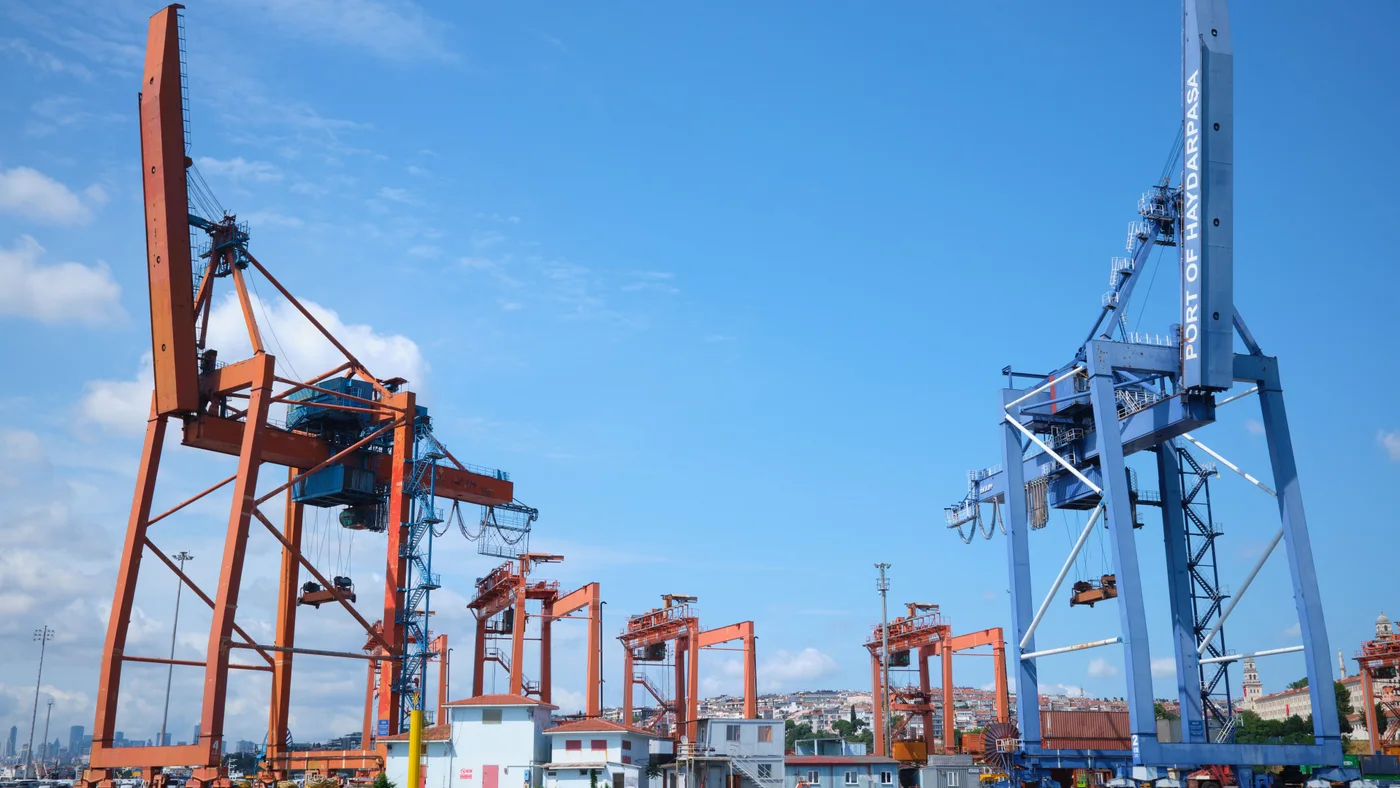
Gantry cranes along a container berth. A mainland gateway is where the international voyage ends and the domestic leg begins.
What the Second CFS Charges For, and Why It Is Not Padding
When cargo passes through a mainland gateway, the gateway CFS runs a full receiving cycle: it receives the container, devans it, counts your cartons against the house bill, stages them, and re-loads them into a different container or hands them to a domestic carrier. That is a second complete handling event, priced separately.
It also creates a second measurement. Your cargo was measured in China for the ocean leg; at the gateway it may be measured again for the domestic leg, on a different tariff basis — so a shipment billed at four cubic meters from China can be billed at a different figure for the mainland-to-Honolulu segment. That is not a re-measurement dispute in the sense covered in our guide to disputing a re-measured CBM charge; it is two services with two rate bases. How the origin-side figure is set is covered in 來自中國的拼箱運輸。
Two charges belong apart on any gateway-routed Hawaii invoice: the gateway handling fee for physical work at the mainland CFS, and the domestic ocean freight for the coastwise leg. A quote that bundles them into one “Hawaii surcharge” hides which one you could reduce by changing the routing, and which one attaches only to a gateway routing at all.
The Questions That Settle the Routing Before You Pay
Two questions, asked in writing before the deposit, decide which structure you are buying: “What is the port of discharge on the master bill?” 和 “Is my cargo devanned at that gateway, with a separate charge?” A mainland gateway means Structure B, whatever the quote calls itself. Two more settle the rest: whether the mainland-to-Honolulu leg runs on a coastwise-qualified vessel, and whether the entry is filed at the gateway or in-bond to Honolulu.
Empty pallets staged for the next load. Each additional CFS touch adds a receiving, counting, and re-loading event.
The Port of Discharge Sets Most of the Cost; the Invoice Only Reports It
Most of the charges that surprise an importer trace back to a routing decision made before the container was loaded — not all: a CBP exam, storage after a late pickup, or a chassis charge are not booking decisions. A gateway CFS fee exists because the cargo went into a mainland-bound box. A coastwise freight charge exists because the onward leg is domestic. An in-bond fee exists because the entry was deferred.
A comparable quote separates five things: origin CFS and export handling, the international ocean leg, gateway handling if any, the domestic sea leg if any, and destination charges in Honolulu. A quote that collapses the middle three into one number cannot be compared to a competitor’s.
The distinction that matters is between a route you chose and a route chosen for you. A direct China-to-Honolulu consolidation avoids the gateway and the mainland coastwise leg; only the inter-island move, if any, stays inside the coastwise rules. A mainland-gateway routing buys frequency and pays for it in handling events. Both are defensible; only one is defensible if you did not know which you were buying.
我們的 LCL freight forwarding service quotes Hawaii with the discharge port and the CFS count stated, because a quote that hides them cannot be compared to anyone else’s. Send the dimensions, the piece count, the consignee’s island, and the goods-ready date, and the two structures can be priced against each other.